

OECD Global’s Blue Print for African Governments, others.
By Mohammed A. Abu
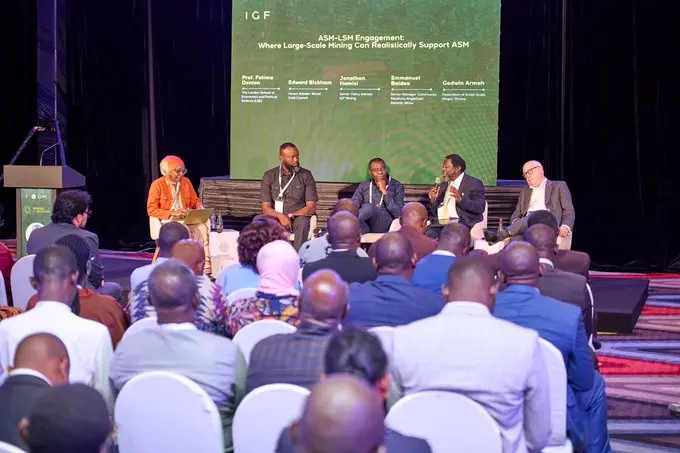
On the occasion of the African Minerals Policy Forum – Mining in Motion in Accra, Ghana, the OECD has just released a new policy paper Critical Minerals in Africa: A regional overview. It examines Africa’s current and potential future role in global critical minerals supply chains and offers policy recommendations to leverage mineral endowments in support of development objectives.
As the discourse on the need for more prudent governance and sustainable management of Africa’s abundant minerals potential in order to maximize economic gains drives the shift from raw materials exports to local processing and value addition for exports across the continent, the OECD Global Relations takes a critical look at the emerging critical minerals paradigm, it’s enabler role in the green transition and offers pathways.
OECD Global Relations notes in its fifty-four (54) paged Policy Paper,” Critical minerals in Africa A regional overview Volume 2026, in a disclaimer, notes, the work, “is issued under the responsibility of the Secretary-General of the OECD, and does not necessarily reflect the official views of OECD Member countries”. adding, “This document and any map included herein are without prejudice to the status of or sovereignty over any territory, to the delimitation of international frontiers and boundaries and to the name of any territory, city or area”.
Advanced and emerging economies, it notes, are competing to secure the critical minerals needed for the digital and green transitions, defense and advanced manufacturing. Africa it underscores, holds a large share of these resources but it intimates, accounts for only 10.6% of global critical mineral exports, almost all of them raw or semi-processed.
This Regional Note examines Africa’s current and potential role in supply chains for cobalt, copper, graphite, lithium, manganese and nickel. It reviews production, investment and trade patterns and the main constraints on the sector, then sets out the fundamentals African countries need to benefit from their resources: robust geological information systems, updated legal and fiscal frameworks, stronger linkages to the wider economy and formalized artisanal and small-scale mining. It concludes with recommendations for African governments, regional institutions, international partners and supply chain actors.
Recommendations
For African governments
- Strengthen geological knowledge and data systems. Modernise national geological surveys, digitize existing records, develop technical expertise and adopt harmonized classification and reporting standards such as AMREC–PARC. Use improved data to inform licensing, investment decisions and national development strategies.
- Enhance transparency and accountability in licensing and contracts. Expand competitive bidding where appropriate, strengthen due diligence on applicants, publish contracts and beneficial ownership information, and deepen implementation of the EITI. Improve alternative dispute resolution mechanisms to address land and mining conflicts more efficiently.
- Design fiscal regimes that balance public revenues and investment. Combine royalties, corporate income tax supported by effective audit capacity, and resource rent taxes to capture windfall profits. Align incentives with national development priorities, including processing and downstream activities, and provide predictable rules supported by transparent assessments of costs and benefits.
- Align industrial policy with national priorities and market conditions. Integrate critical minerals strategies into national development plans. Before introducing export restrictions or other measures to encourage domestic value addition, assess whether processing capacity, energy, infrastructure, finance and market demand are sufficient to support them.
Where such measures are adopted, apply them transparently and predictably. Develop local supplier capabilities in engineering, logistics and services alongside employment opportunities.
- Support the formalization of artisanal and small-scale mining. Develop context-specific approaches that expand legal recognition, access to finance, occupational safety, environmental support and participation in formal supply chains
Strengthen environmental protection and community participation. Ensure that mine closure and rehabilitation are adequately funded and enforced, protect sensitive areas, assess water availability and involve affected communities in decisions throughout the mining cycle.
For regional and continental institutions
- Expand regional value chains through the AfCFTA. Improve trade facilitation, address tariff and non-tariff barriers in line with AfCFTA commitments, and invest in cross-border infrastructure that supports intra-African trade in mineral products.
- Coordinate regional industrial development. Explore opportunities for processing hubs that serve multiple countries and connect mineral-producing areas to corridors such as Lobito, TAZARA and Walvis Bay. Improve coordination on investment incentives to limit costly competition and support viable regional markets.
Promote regulatory cooperation and compatible standards. Build on the Africa Mining Vision, the African Green Minerals Strategy and the ICGLR Regional Initiative against the Illegal Exploitation of Natural Resources to improve consistency across regulatory, fiscal and certification frameworks while accounting for national circumstances.
For international partners and consuming economies
- Match supply partnerships with investment in value creation. Complement offtake agreements with investment in processing, infrastructure, energy and skills. Use blended finance. and risk guarantees to support commercially viable projects and strengthen productive capacity in mineral-producing countries.
- Ensure international frameworks support development objectives.
Assess the implications of trade measures, investment agreements and sustainable finance frameworks for value addition in Africa. Engage producing countries in addressing policy tensions between supply security, market access and industrial development.
- Support institutional capacity in response to national priorities. Provide sustained financing and technical cooperation for geological surveys, mining authorities and customs administrations, including in data management, contract negotiation, revenue collection, due diligence and traceability.
For companies and other supply chain actors
- Apply due diligence in ways that support responsible engagement. Design proportionate risk-based traceability systems that enable artisanal producers to participate in formal markets. Engage local communities and producer organizations in monitoring, accountability and the resolution of concerns.
- Strengthen local economic linkages. Expand local procurement where commercially feasible, invest in skills and supplier development, disclose payments to governments and provide for mine rehabilitation throughout the project cycle.
Africa’s critical minerals offer an opportunity to strengthen productive capacity, expand regional trade and increase the economic value generated from the continent’s resources. The extent to which this opportunity translates into lasting benefits will depend on how African countries define and pursue their development priorities, the effectiveness of regional cooperation, and the terms on which international partnerships are established.
Progress does not depend on a single policy instrument. It requires approaches that reflect different national circumstances while addressing shared constraints in infrastructure, finance, market access and industrial capacity.
Regional cooperation can help achieve economies of scale, while international partners and companies have a role in aligning investment, trade and sourcing practices with value creation in producing countries.
Dialogue between mineral-producing and mineral-consuming economies, including through the OECD Critical Minerals Initiative, can help identify areas of mutual interest and address differences in policy priorities.
The objective is not only to build resilient and responsible supply chains, but also to ensure that the countries supplying critical minerals can pursue their own development objectives and capture a better share of the value generated by global demand.
Working with over 100 countries, the Organization for Economic Cooperation and Development (OECD) is a global policy forum that promotes policies to preserve individual liberty and improve the economic and social well-being of people around the world.
Photo credits: Cover © OECD/Lucian Coman/Shutterstock.com
SOURCE
OECD Global Relations